

Article: How to Care for Spring Bulbs Indoors
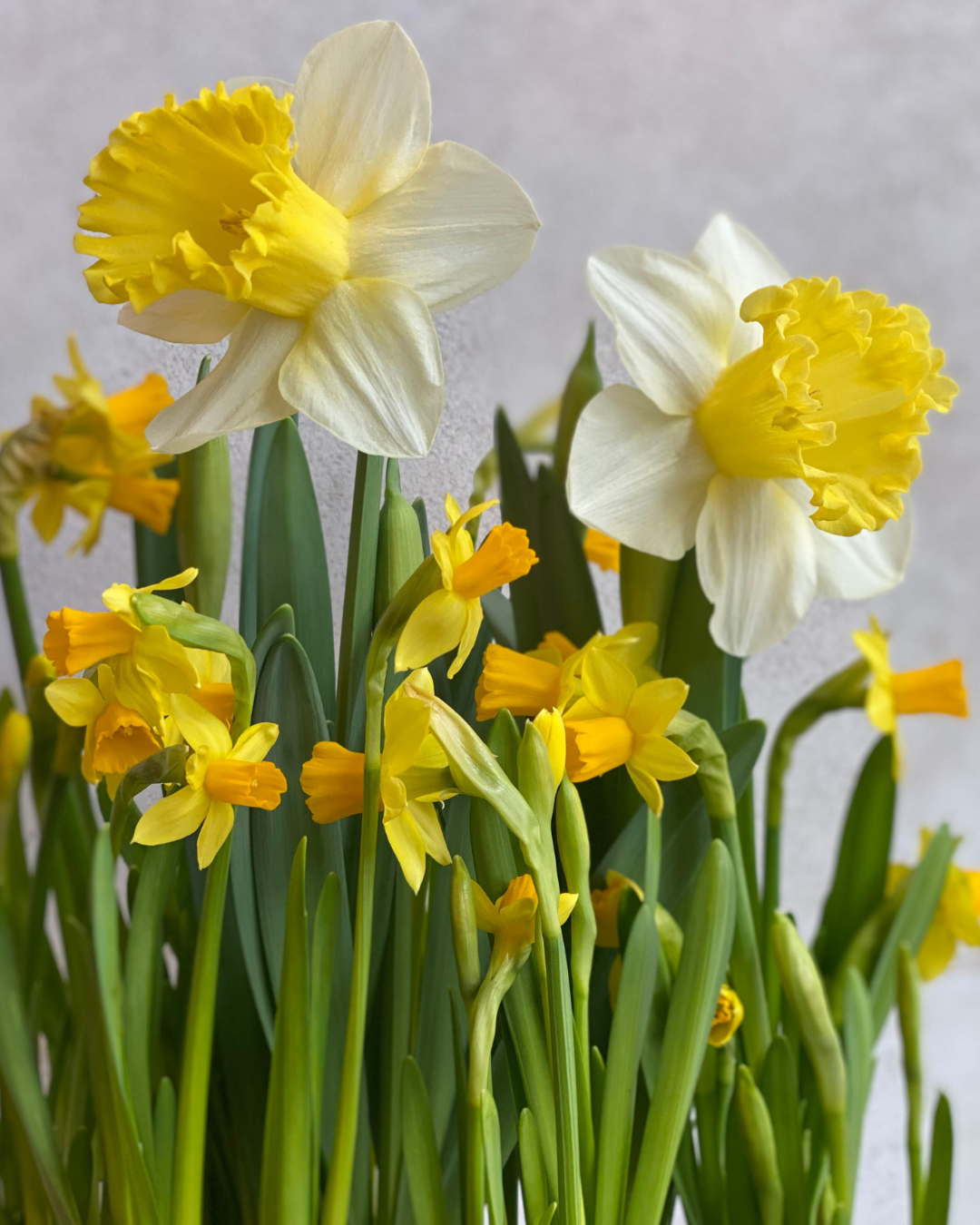
How to Care for Spring Bulbs Indoors
Caring for spring bulbs indoors is often simpler than expected, provided a few key principles are respected. When bulbs are planted in soil rather than grown in water, they benefit from a more stable environment that closely mirrors natural conditions. The result is not only healthier growth, but also longer-lasting blooms and a more balanced indoor display.
This guide explains how to care for planted spring bulbs indoors, with particular attention to containers without drainage holes, where moderation and careful observation are essential.
Planting Spring Bulbs in Indoor Containers
Soil composition and bulb placement
Spring bulbs perform best in a light, well-structured growing medium. A mix of soil, sand, and moss helps regulate moisture while maintaining enough air around the bulbs and developing roots. In indoor containers without drainage holes, this balance is especially important to avoid water accumulation at the base of the pot.
Bulbs should be planted with their necks positioned just below the soil surface. This placement protects the bulb while allowing emerging shoots to grow naturally. Once planted, the surface can be finished with a layer of moss.
The role of moss
Moss plays both a functional and aesthetic role. It helps slow evaporation, keeping surface moisture more consistent, and reduces the need for frequent watering. At the same time, it creates a soft, woodland-inspired finish that complements early spring bulbs.
Moss should be lightly placed rather than compacted, and it should never be used to disguise overly wet soil. It supports moisture balance, but careful watering remains essential.

Watering Bulbs Without Drainage Holes
Less water, more attention
When containers lack drainage holes, watering must be restrained and intentional. During the bulb’s initial resting phase, only minimal moisture is required. The soil should feel lightly damp to the touch, never saturated.
Because excess water cannot escape, overwatering is the primary cause of bulb failure indoors. Allow the upper layer of soil to dry slightly between waterings, and rely on visual and tactile cues rather than a fixed schedule.
Adjusting care as growth begins
Once roots have developed and shoots begin to emerge, bulbs benefit from slightly more regular moisture. At this stage, containers should be moved to a cool, bright location with indirect light. Keep the soil evenly but lightly moist as leaves grow, ensuring water is distributed slowly and evenly.
Light and Temperature for Indoor Bulbs
Cool indoor temperatures encourage sturdy stems and gradual growth. Avoid placing bulb containers near radiators, fireplaces, or strong heat sources. Bright rooms with filtered daylight are ideal, helping foliage develop without stressing the plant.
Maintaining cooler conditions also helps extend the flowering period once buds appear.

Common Mistakes to Avoid with Indoor Bulbs
Even when winter bulbs are planted correctly, a few common habits can compromise their development indoors. The most frequent issue is excessive watering. In containers without drainage holes, moisture must be introduced slowly and in small amounts, allowing the soil to absorb it evenly.
Another common mistake is placing bulbs in overly warm rooms too early. While light is important, heat can cause rapid, weak growth and shorten the flowering period. Bulbs benefit from cooler conditions as they establish roots and foliage.
Finally, avoid pressing down the moss layer or disturbing the soil surface once growth has begun. Compaction reduces airflow and can trap moisture at the base of the bulbs. Leaving the surface light and undisturbed helps maintain a healthier balance throughout the growing cycle.

Discover Our Planted Spring Bulb Arrangements
These care principles are reflected in our winter and spring bulbs arrangements. Each arrangement is planted in a carefully balanced mix of soil, sand, and moss, then finished with a moss layer that supports moisture control and visual harmony.
Designed in containers without drainage holes, these compositions are intended to be cared for slowly and attentively. With thoughtful placement and moderate watering, they offer a lasting way to introduce the first signs of spring indoors.
👉Discover our indoor arrangements inspired by the changing seasons

Leave a comment
This site is protected by hCaptcha and the hCaptcha Privacy Policy and Terms of Service apply.