

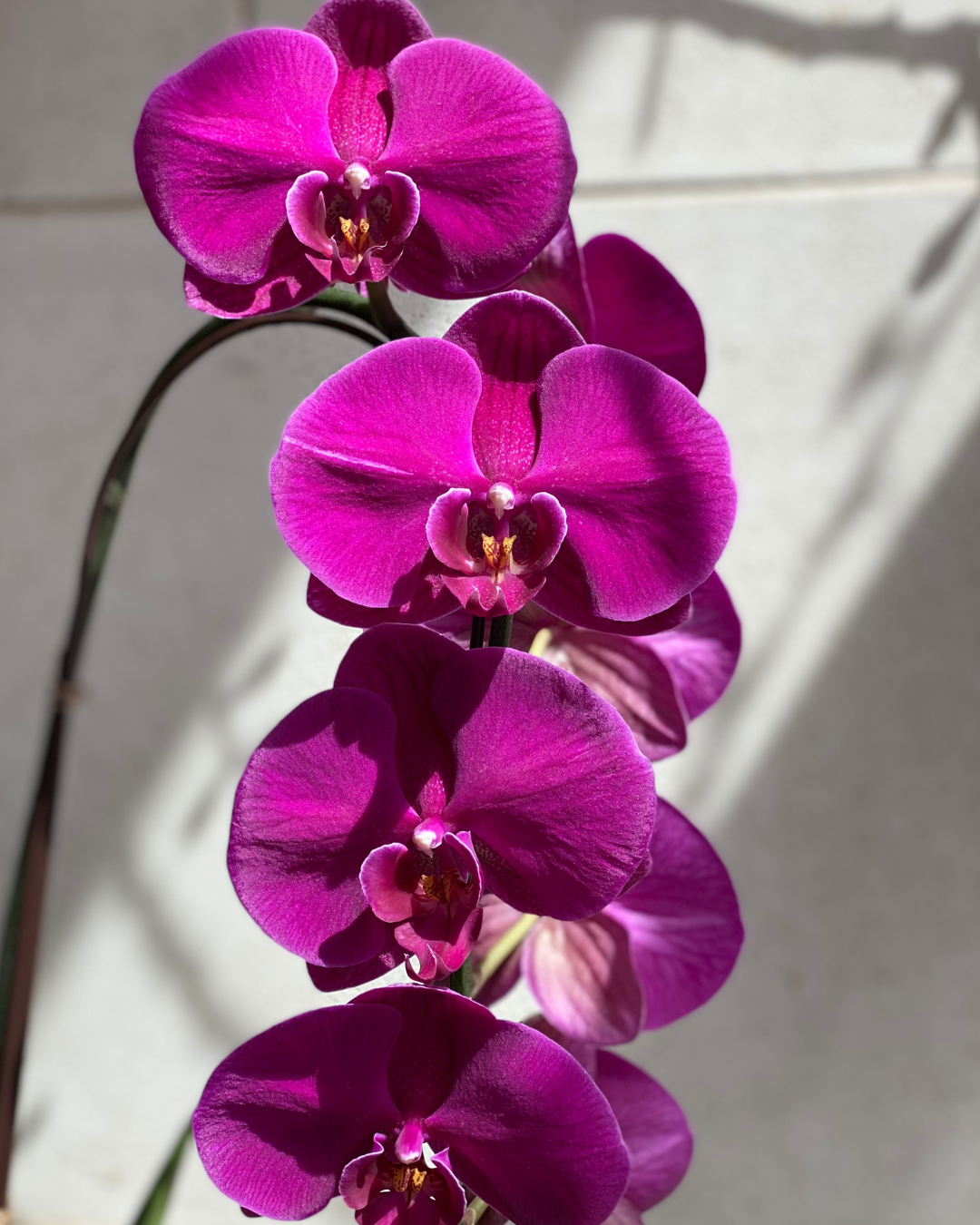
How to Care for a Phalaenopsis Orchid
A clear, beginner-friendly guide to keeping your phalaenopsis orchid healthy and blooming
Phalaenopsis orchids — often called “moth orchids” for their wing-like petals — are among the most popular indoor orchids, known for their long-lasting blooms and graceful shape. Despite their elegant appearance, they’re surprisingly easy to care for, even for beginners. With a few simple habits, your orchid can thrive, rebloom, and become a permanent part of your indoor garden.
In this guide, we break down the essentials of phalaenopsis orchid care, explaining how to water, light, repot, and maintain your plant in a way that supports healthy growth year-round.
☀️ Light: Bright, Gentle, and Indirect
Orchids love bright, indirect light. A room with filtered daylight is ideal, such as an east-facing window or a lightly shaded south window.
Why indirect light matters:
Direct sun can scorch the leaves, causing yellow patches or dehydration. Gentle, diffused light keeps the orchid growing steadily without stress.

💧 Watering: Less Often Is Better
One of the most important orchid-care rules:
Too much water is far more dangerous than too little.
Water infrequently
Let the plant guide you. Phalaenopsis orchids naturally grow on trees in humid environments, meaning their roots are designed to dry slightly between waterings.
Signs it’s time to water:
- roots appear silvery or pale
- pot feels very light
- top of the potting medium is dry
Water only the roots
Keep leaves and flowers dry to prevent rot. Water thoroughly, allow excess water to drain completely, and never let the plant sit in water.
🪴 Potting & Drainage: The Foundation of a Healthy Orchid
Phalaenopsis should always be grown in a well-draining pot with air circulation around the roots. Orchid bark, sphagnum moss, or specialty orchid mixes work well.
Good drainage mimics their natural environment and prevents root rot.
Tip: If your orchid comes in a plastic grower’s pot placed inside a decorative cachepot, remove the inner pot when watering to avoid standing water.

🌱 Fertilizing: Light and Regular Feeding
Phalaenopsis orchids respond well to water-soluble fertilizer applied at low strength.
How often?
Every 1–2 weeks during active growth, but not during the flowering phase.
Weakly, weekly
Many growers recommend using a diluted fertilizer solution more frequently instead of a strong mix less often. This supports steady, healthy development.
🌸 After Blooming: What to Expect Next
Once the flowers fade, don’t throw your orchid away — phalaenopsis are known for reblooming easily.
Post-bloom care
- Continue providing bright, indirect light
- Maintain moderate watering
- Keep fertilizing (lightly) to support new root and leaf growth
With good care, phalaenopsis orchids can bloom multiple times a year, producing long-lasting flower spikes.

Explore Our Orchid Collection
Whether you’re bringing home your first phalaenopsis or adding to an existing collection, the right pot, planter, or arrangement can elevate both the plant and your space. Our curated orchid selection features elegant single-stem and double-stem phalaenopsis designs, perfect for gifting or brightening your home or condo with long-lasting blooms.
From minimalist ceramic planters to sculptural premium arrangements, each piece highlights the natural beauty of the orchid while keeping care simple and accessible.


Leave a comment
This site is protected by hCaptcha and the hCaptcha Privacy Policy and Terms of Service apply.